How to Put Gas in Your Toyota Corolla the Right Way
Learning how to put gas in Toyota Corolla is simple once you know the basics. This guide walks you through every step, from locating the fuel door to choosing the right fuel type. You will also discover safety tips, common mistakes, and ways to boost fuel economy for your Toyota Corolla.
Fueling your car might seem like the easiest thing in the world. But when you are new to driving or just got a Toyota Corolla, there are a few things worth knowing. Learning how to put gas in Toyota Corolla the right way keeps your engine healthy and your trips smooth.
Many first-time drivers feel unsure at the gas station. Where is the fuel door? What kind of gas goes in? How do you know when to stop? These are all valid questions. And the good news is that this guide answers every single one of them.
Whether you just bought a used Toyota Corolla or you have been driving one for years, this article will help. We will cover everything from the fuel system basics to expert tips that most people never think about. By the end, you will feel confident every time you pull up to a gas station.
Key Takeaways
- Know your fuel type: Most Toyota Corolla models use regular unleaded gasoline with an octane rating of 87.
- Locate the fuel door correctly: The fuel door is on the left side of the rear quarter panel, and you can open it from inside the trunk or with a manual release lever.
- Follow safe refueling practices: Turn off the engine, avoid using your phone, and never re-enter the vehicle while pumping gas.
- Avoid common mistakes: Do not overfill the tank, use the wrong fuel grade, or ignore the fuel gauge warnings.
- Maintain fuel efficiency: Keep your tires inflated, drive smoothly, and use the recommended fuel type to maximize your Toyota Corolla fuel economy.
- Know your fuel tank capacity: The Toyota Corolla fuel tank holds approximately 13 to 15 gallons depending on the model year.
📑 Table of Contents
- Understanding the Toyota Corolla Fuel System
- Step-by-Step Guide to Refueling Your Toyota Corolla
- Choosing the Right Fuel Type for Your Toyota Corolla
- Safety Tips When Pumping Gas
- Common Mistakes to Avoid When Refueling
- Tips to Improve Fuel Economy in Your Toyota Corolla
- Quick Tips for a Smooth Refueling Experience
- Conclusion
Understanding the Toyota Corolla Fuel System
Before you learn how to put gas in Toyota Corolla, it helps to understand the basic fuel system. Once you know how things work, the whole process makes much more sense.
Where Is the Fuel Door on a Toyota Corolla?
The fuel door on a Toyota Corolla is located on the left side of the rear quarter panel. This means it is on the left side of the car when you are facing the front. You might not notice it right away because it blends into the body of the car.
To open the fuel door, you have two options. First, you can open the trunk and look for a small lever or button on the left side. Second, some model years have a manual release tab on the fuel door itself. Just push or pull it gently, and the door pops open.
What Does the Fuel Filler Neck Look Like?
Inside the fuel door, you will find the fuel filler neck. This is the opening where you insert the gas pump nozzle. The Toyota Corolla fuel filler neck is designed to accept standard gas pump nozzles. It has a specific shape that prevents the wrong type of fuel filler from fitting.
The fuel cap sits on top of the filler neck. It screws on and off to seal the fuel tank. A tight fuel cap is important because it prevents fuel vapor from escaping and keeps contaminants out of the tank.
How Big Is the Toyota Corolla Fuel Tank?
The Toyota Corolla fuel tank capacity varies slightly by model year and trim. Most modern Toyota Corolla models have a fuel tank that holds between 13 and 15 gallons. This gives you a decent driving range between fill-ups.
Older models from the 2000s and early 2010s tend to have slightly smaller tanks. Newer models from 2014 onward often have tanks closer to 15 gallons. You can always check your owner manual for the exact fuel tank size for your specific Toyota Corolla.
Step-by-Step Guide to Refueling Your Toyota Corolla
Now that you understand the basics, let us walk through the actual process. Follow these steps every time you refuel your Toyota Corolla.
Step 1: Pull Up to the Gas Station
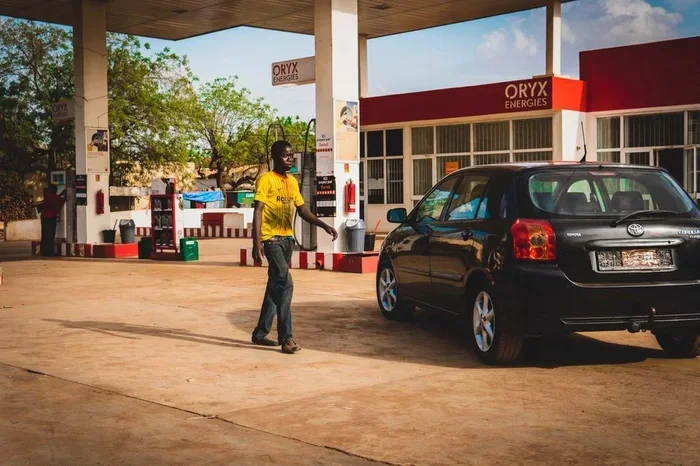
Drive your Toyota Corolla to a gas station. Try to pull up so that the left side of your car faces the fuel pump. This gives you easy access to the fuel door. You want enough space to open the door fully and comfortably reach the pump.
If the gas station is crowded, do not worry. You can still refuel from the driver side. Just be patient and wait for your turn.
Step 2: Turn Off the Engine
This is a critical safety step. Always turn off your Toyota Corolla engine before you start pumping gas. A running engine creates heat and sparks, which can be dangerous around fuel vapors.
Put the car in park and take the key out of the ignition. This simple habit keeps everyone safe at the gas station.
Step 3: Open the Fuel Door
Walk to the left side of the rear of your car. Open the trunk and find the fuel door release lever. Pull it, and the fuel door will pop open. If your model does not have a trunk release, look for the small tab on the fuel door edge. Push it gently to release the door.
Remove the fuel cap by turning it counterclockwise. Set it somewhere safe where it will not roll away. Some fuel caps have a tether that keeps them attached to the car.
Step 4: Insert the Nozzle and Pump Gas
Pick up the gas pump nozzle and insert it into the fuel filler neck. Squeeze the handle to start the fuel flow. The pump will automatically stop when the tank is full. This is called the automatic shutoff feature, and it is designed to prevent overfilling.
Let the pump do its job. Do not squeeze the handle too hard. Let the fuel flow at its natural pace. Most Toyota Corolla models take about 3 to 5 minutes to fill up from empty.
Step 5: Replace the Fuel Cap
Once the pump stops, remove the nozzle carefully. Put the fuel cap back on and turn it clockwise until it clicks. A clicking sound means the cap is sealed properly.
Do not overtighten the cap. Just tighten it until you hear the click. Then close the fuel door. Your Toyota Corolla is now ready to go.
Step 6: Check the Fuel Gauge
Get back in your car and start the engine. Look at the fuel gauge on the dashboard. The needle should show that the tank is now fuller than before. This is a good way to confirm that the refueling process worked correctly.
Tip: Always try to keep your fuel level above a quarter tank. This protects the fuel pump and prevents you from getting stranded.
Choosing the Right Fuel Type for Your Toyota Corolla
Not all gasoline is the same. Using the wrong fuel type can hurt your engine or reduce performance. Here is what you need to know about fuel selection.
Regular Unleaded Gasoline Is What You Need
Almost all Toyota Corolla models run perfectly well on regular unleaded gasoline. The octane rating for regular gas is 87. This is the most common and affordable fuel type at every gas station.
You do not need premium gasoline for a Toyota Corolla. Premium fuel has a higher octane rating, usually 91 or 93. It is designed for high-performance engines with higher compression ratios. The Toyota Corolla engine does not need this extra octane.
What Happens If You Use the Wrong Fuel?
Using a lower octane fuel than recommended can cause engine knocking. This is a pinging or rattling sound that comes from the engine. Over time, it can cause damage.
Using a higher octane fuel than needed will not hurt your car. But it is a waste of money. Premium gas costs more, and your Toyota Corolla cannot use the extra octane. Stick with regular unleaded gasoline and save your money.
Ethanol Blends and the Toyota Corolla
Most Toyota Corolla models are designed to run on gasoline with up to 10% ethanol, known as E10. This is the standard fuel sold at most gas stations in the United States.
Some gas stations offer E15 or E85 blends. Do not use these in a standard Toyota Corolla unless your owner manual specifically says it is okay. Ethanol blends above 10% can damage fuel system components over time.
| Fuel Type | Octane Rating | Suitable for Toyota Corolla? |
|---|---|---|
| Regular Unleaded | 87 | Yes — Recommended |
| Mid-Grade | 89 | Not needed, but will not cause harm |
| Premium | 91-93 | Not needed — waste of money |
| E10 (10% ethanol) | 87 | Yes — Standard at most stations |
| E15 or E85 | Varies | No — Not recommended |
Safety Tips When Pumping Gas
Gas station safety is something every driver should take seriously. A few simple precautions can prevent accidents and keep you safe.
Always Turn Off Your Engine
We mentioned this earlier, but it is worth repeating. Never pump gas with your Toyota Corolla engine running. Turn off the engine, remove the key, and make sure the car is in park.
Do Not Use Your Phone
Mobile phones can create small electrical sparks. While the risk is low, it is better to be safe. Put your phone away while you are at the pump. Focus on the fueling process.
Never Re-Enter Your Vehicle While Pumping
Getting back into your car while fueling can generate static electricity. When you touch the fuel nozzle again, that static discharge can ignite fuel vapors. Stay outside your vehicle the entire time you are pumping gas.
Watch for Spills
If you spill fuel on yourself or the car, wipe it up immediately. Fuel vapors are flammable and can ignite easily. If you get fuel on your clothes, change before getting back in the car.
Know Where the Fire Extinguisher Is
Most gas stations have a fire extinguisher nearby. Before you start pumping, take a quick look around. Know where the extinguisher is in case of an emergency. It is a small habit that can make a big difference.
Common Mistakes to Avoid When Refueling
Even experienced drivers make mistakes at the gas pump. Here are the most common ones and how to avoid them.
Overfilling the Tank
Some people try to squeeze every last drop of fuel into the tank. They keep pumping after the automatic shutoff kicks in. This is a bad idea. Overfilling can cause fuel to spill into the vapor recovery system, which can damage your car and the environment.
When the pump stops, let go of the handle. Do not try to add more fuel. Trust the automatic shutoff mechanism.
Topping Off the Tank
Topping off means adding a little extra fuel after the pump stops. This pushes fuel into the charcoal canister, which is part of the emissions system. It can cause costly repairs over time. Always stop when the pump stops.
Using the Wrong Fuel Grade
Some drivers think premium gas makes any car run better. This is not true for the Toyota Corolla. Using premium fuel will not improve performance or fuel economy. Stick with regular unleaded gasoline and save your extra cash.
Ignoring the Check Engine Light
If the check engine light comes on after you refuel, check your fuel cap first. A loose or damaged fuel cap can trigger this warning light. Tighten the cap and see if the light goes away after a few miles of driving.
Leaving the Fuel Door Open
It sounds silly, but people forget to close the fuel door all the time. An open fuel door can cause fuel vapor leaks and damage to the fuel door hinge. Always double-check that the fuel door is fully closed before you drive away.
Tips to Improve Fuel Economy in Your Toyota Corolla
Getting the most out of every gallon of fuel is something every Toyota Corolla owner wants. Here are practical tips to boost your fuel economy.
Keep Your Tires Properly Inflated
Underinflated tires create more rolling resistance, which makes your engine work harder. Check your tire pressure at least once a month. The recommended tire pressure for a Toyota Corolla is usually between 30 and 35 PSI. You can find the exact number on the driver side door jamb.
Drive Smoothly and Steadily
Aggressive driving wastes fuel. Avoid hard acceleration and sudden braking. Accelerate gently and maintain a steady speed. Using cruise control on highways is a great way to improve fuel economy.
Remove Excess Weight from Your Car
Extra weight makes your engine work harder. Clean out your trunk and remove any heavy items you do not need. A lighter car uses less fuel, plain and simple.
Keep Up with Regular Maintenance
Regular oil changes, air filter replacements, and spark plug checks all contribute to better fuel economy. A well-maintained Toyota Corolla runs more efficiently and uses less fuel. Follow the maintenance schedule in your owner manual.
Use the Recommended Fuel Type
We already covered this, but it is worth repeating. Using regular unleaded gasoline as recommended by Toyota keeps your engine running at peak efficiency. Premium fuel will not give you better mileage in a standard Corolla.
Plan Your Trips Wisely
Combine errands into one trip instead of making multiple short drives. A warm engine runs more efficiently than a cold one. Also, try to avoid driving during heavy traffic when possible. Stop-and-go driving burns more fuel.
Expert Insight: According to the U.S. Department of Energy, proper tire inflation alone can improve fuel economy by up to 3%. Small habits add up to significant savings over time.
Quick Tips for a Smooth Refueling Experience
- Keep a small towel in your trunk. It comes in handy if you spill fuel on yourself or the car.
- Wipe your fuel cap clean before removing it. This prevents dirt and debris from entering the fuel tank.
- Refuel early in the morning or late in the evening. Cooler temperatures mean less fuel evaporation, so you get more gas for your money.
- Use the same gas station regularly. Consistent fuel quality helps keep your engine running smoothly.
- Always replace your fuel cap tightly. A loose cap can trigger the check engine light and reduce fuel economy.
- Do not wait until your tank is completely empty. Running on empty can damage the fuel pump over time.
Conclusion
Learning how to put gas in Toyota Corolla is a fundamental skill every driver should master. From locating the fuel door to choosing the right fuel type, each step matters. Follow the steps in this guide, and you will refuel your Toyota Corolla safely and efficiently every single time.
Remember to use regular unleaded gasoline, avoid overfilling your tank, and follow basic safety precautions. These simple habits protect your car and save you money in the long run. Taking care of your fuel system is one of the easiest ways to keep your Toyota Corolla running strong for years to come.
Now that you have all the information you need, the next time you pull up to a gas station, you will feel completely confident. Follow the steps, stay safe, and enjoy the drive.
Frequently Asked Questions
What type of gas does a Toyota Corolla take?
Most Toyota Corolla models use regular unleaded gasoline with an octane rating of 87. You do not need premium or mid-grade fuel. Check your owner manual for the exact fuel requirements for your specific model year.
Where is the fuel door release on a Toyota Corolla?
The fuel door release is located inside the trunk on the left side. Pull the lever, and the fuel door will pop open. Some older models have a manual tab on the fuel door edge that you can push to release it.
How big is the Toyota Corolla fuel tank?
The Toyota Corolla fuel tank holds approximately 13 to 15 gallons, depending on the model year and trim level. Newer models tend to have larger tanks than older ones. You can find the exact capacity in your owner manual.
Can I use E85 ethanol fuel in my Toyota Corolla?
No, most Toyota Corolla models are not designed for E85 fuel. They are built to run on regular gasoline with up to 10% ethanol (E10). Using higher ethanol blends can damage fuel system components. Always check your owner manual before using any fuel blend.
Why does my check engine light come on after refueling?
A loose or improperly sealed fuel cap is the most common cause. Remove the fuel cap, clean the seal, and reinstall it tightly. The light should turn off after a few miles of driving. If it stays on, have a mechanic check your fuel system.
How often should I refuel my Toyota Corolla?
This depends on your driving habits and fuel tank size. Most Toyota Corolla owners refuel every 300 to 400 miles. Try to keep your fuel level above a quarter tank to protect the fuel pump and avoid getting stranded.
=== CONCLUSION ===
Knowing how to put gas in Toyota Corolla the right way is essential for every driver. It is more than just pulling up to a pump and squeezing the handle. It is about understanding your car, choosing the right fuel, following safety steps, and building habits that protect your engine. This guide has given you everything you need to refuel with confidence. Apply these tips every time you visit a gas station, and your Toyota Corolla will thank you with reliable performance and great fuel economy for miles to come.